Factorem machines precision components from aluminium, titanium, stainless steel, and engineering polymers, with engineer review, ISO 9001 quality controls, and full dimensional documentation on every order.
±0.005mm
Standard tolerance
600×500×400mm
Max envelope
7–14 days
Lead time
ISO 9001
Certified
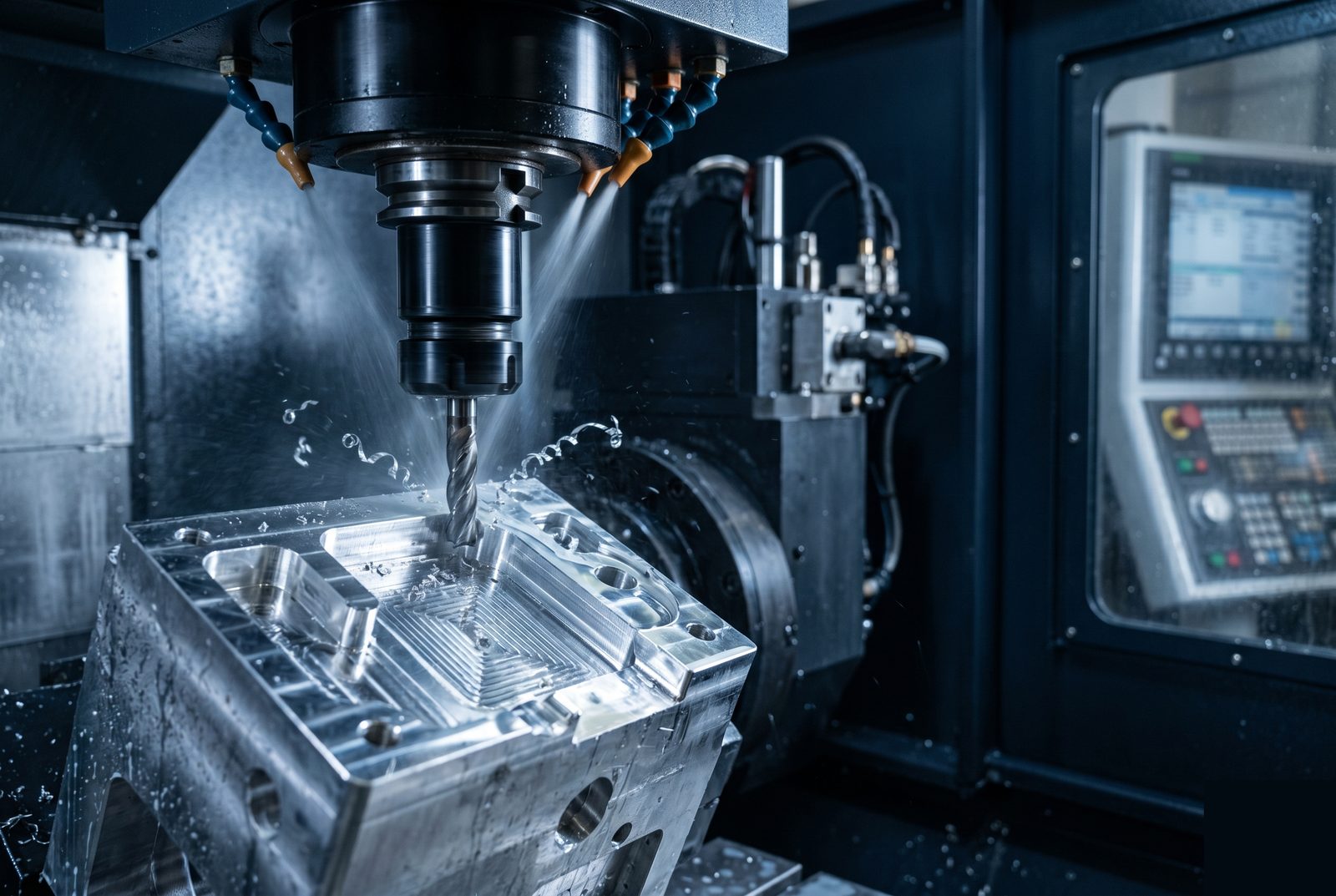
These are common parameters for CNC machining work at Factorem. Most jobs fall within this range, and many fall outside it. Send your file and we'll tell you what's achievable.
Standard Tolerance
±0.005mm
Critical bore & flatness features. General features ±0.01–0.05mm.
Max Part Envelope
600×500×400mm
Larger parts reviewed individually through our supplier network.
Min Internal Radius
0.5mm
Driven by end mill geometry. Sharp inside corners need EDM or grinding.
Min Wall Thickness
0.8mm
Aluminium. Thinner walls possible in some geometries, reviewed case-by-case.
Surface Finish (Ra)
Ra 0.8µm
Machined. Ra 0.2µm ground available for critical sealing or optical surfaces.
Lead Time
7–14 days
Standard. Expedited options reviewed on request depending on capacity.
Common CNC operations available at Factorem. If your part needs a combination or something not listed, send it and we'll advise.

3-axis to 7-axis milling for prismatic, pocket, and contoured geometries. The default operation for enclosures, housings, brackets, optical mounts, and most precision structural parts.
Commonly used for
Flat and pocket features, multi-face parts, standard tolerances to ±0.005mm
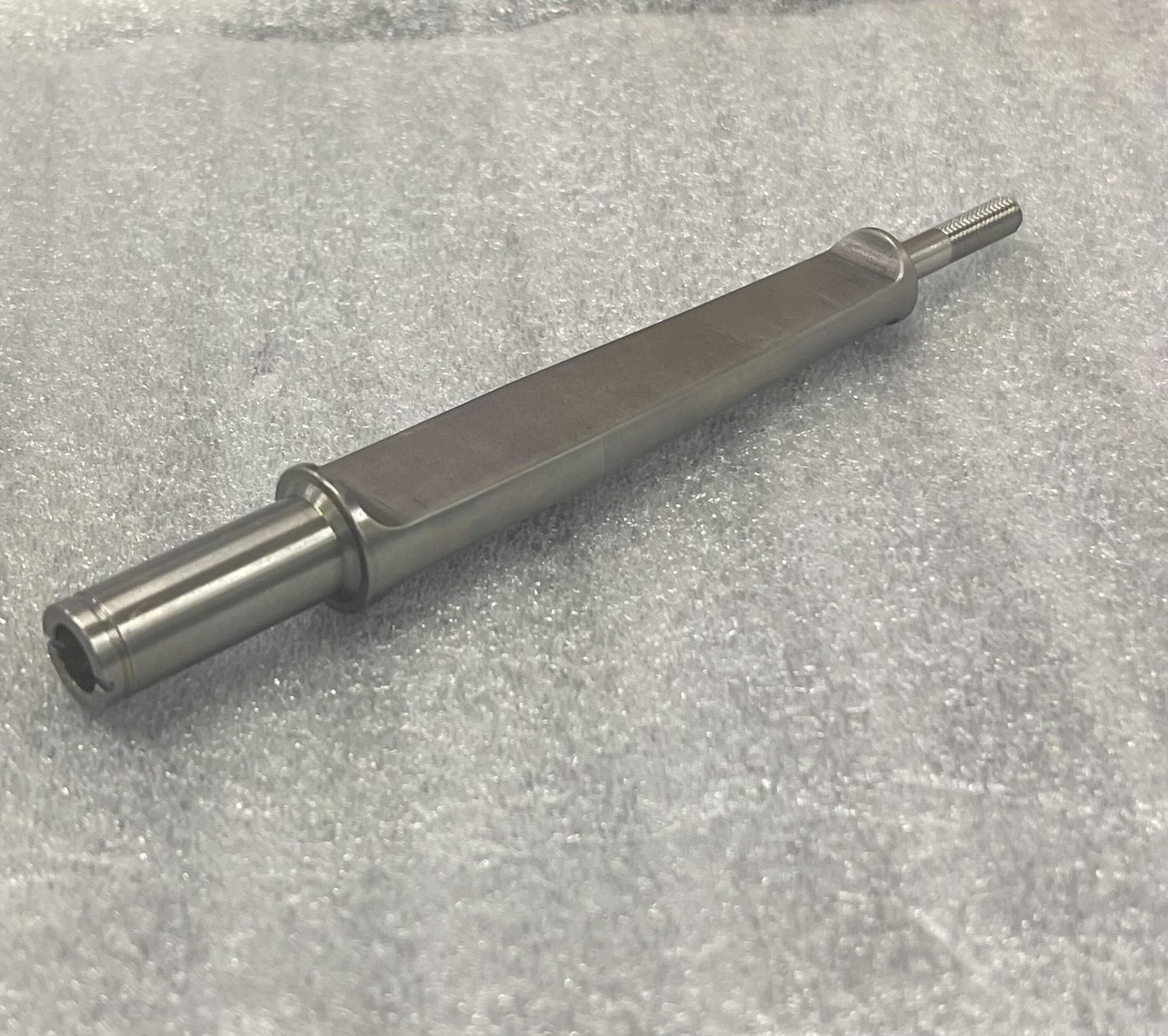
Cylindrical, conical, and rotationally symmetric parts machined on CNC lathes. Turned features can be combined with milling in turn-mill centres for shaft-with-flats or other compound geometries.
Commonly used for
Shafts, bushings, flanged connectors, precision bores, rotational components
Wire EDM cuts hardened materials and produces true sharp internal corners that end mills can't reach. Sinker EDM is used for deep narrow slots and complex cavity forms in tool steel and hardened alloys.
Commonly used for
Sharp-cornered pockets, hardened steel tooling, thin slots, complex die features
Multi-pallet fixturing, live tooling, thread milling, precision surface grinding, custom workholding. Tell us your geometry and we'll scope the right operation.
From Our Machines
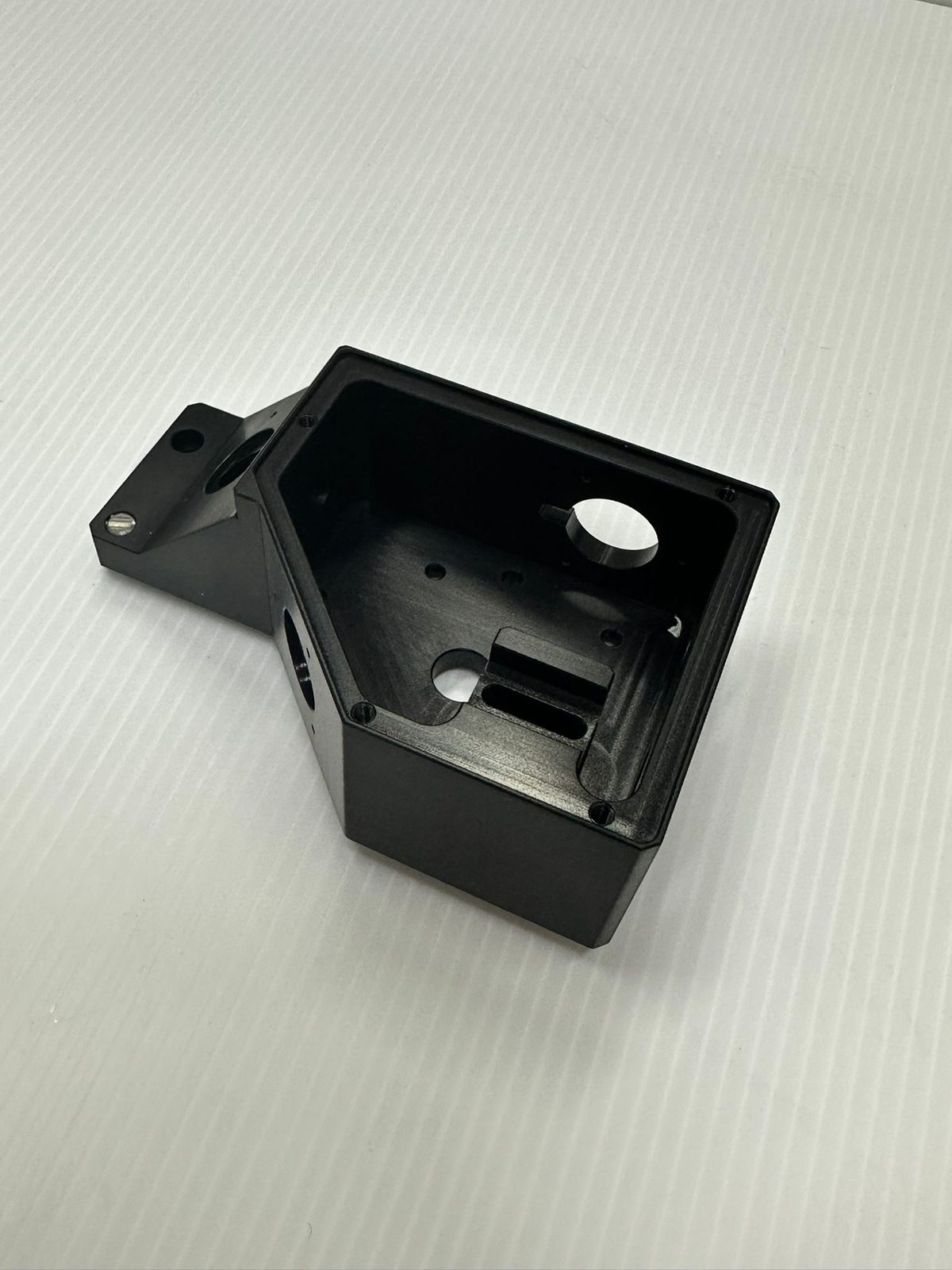
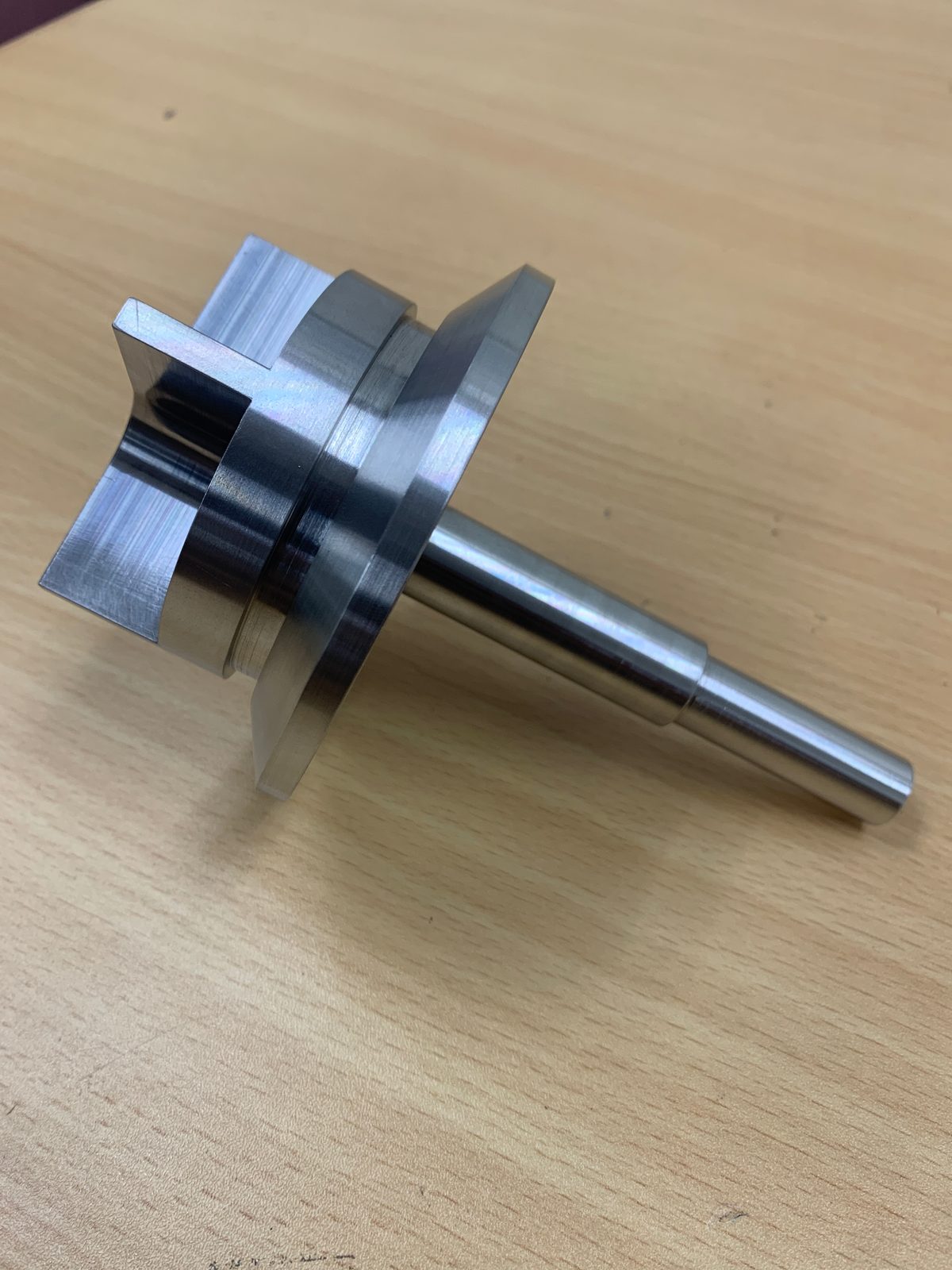
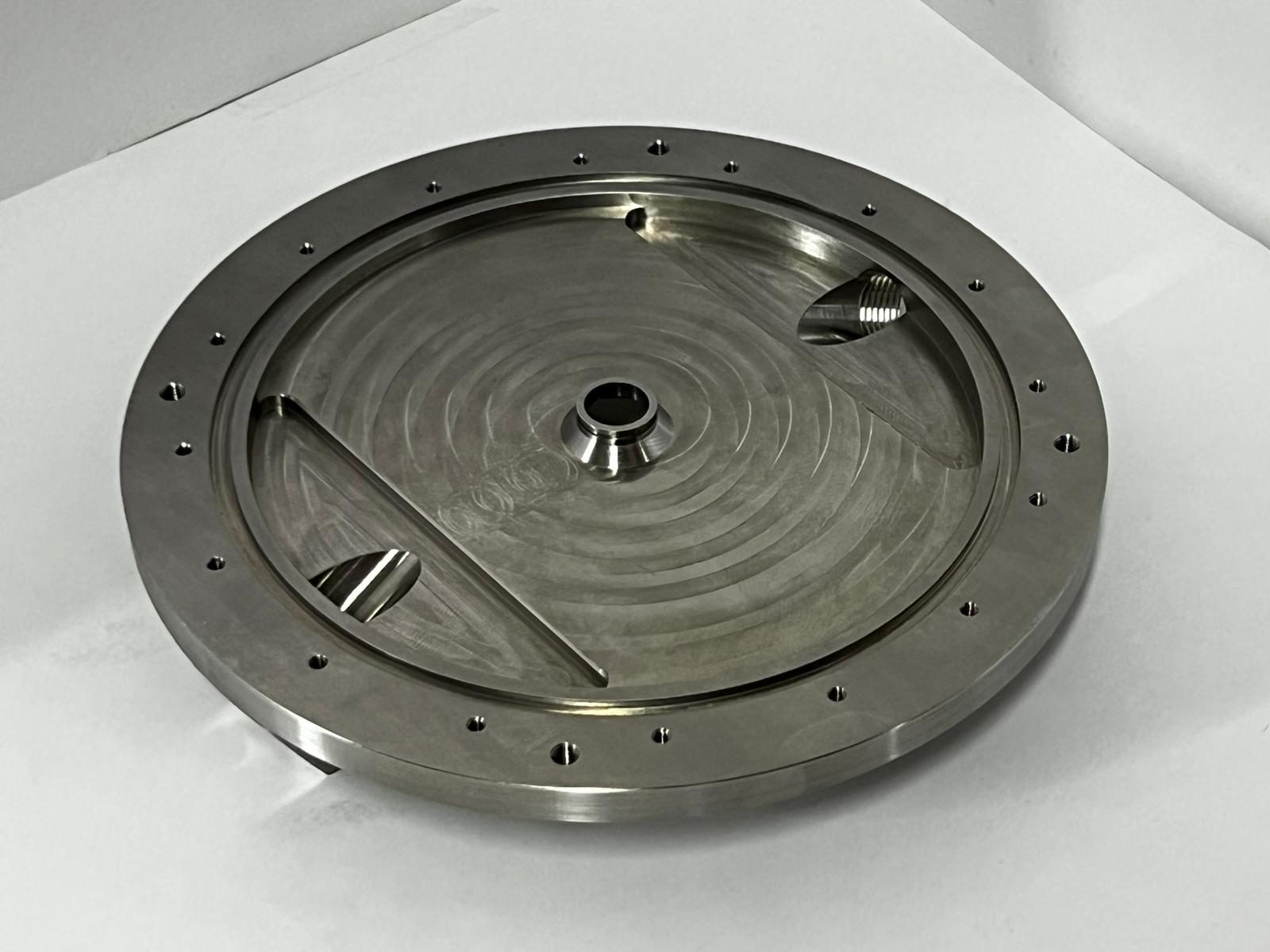
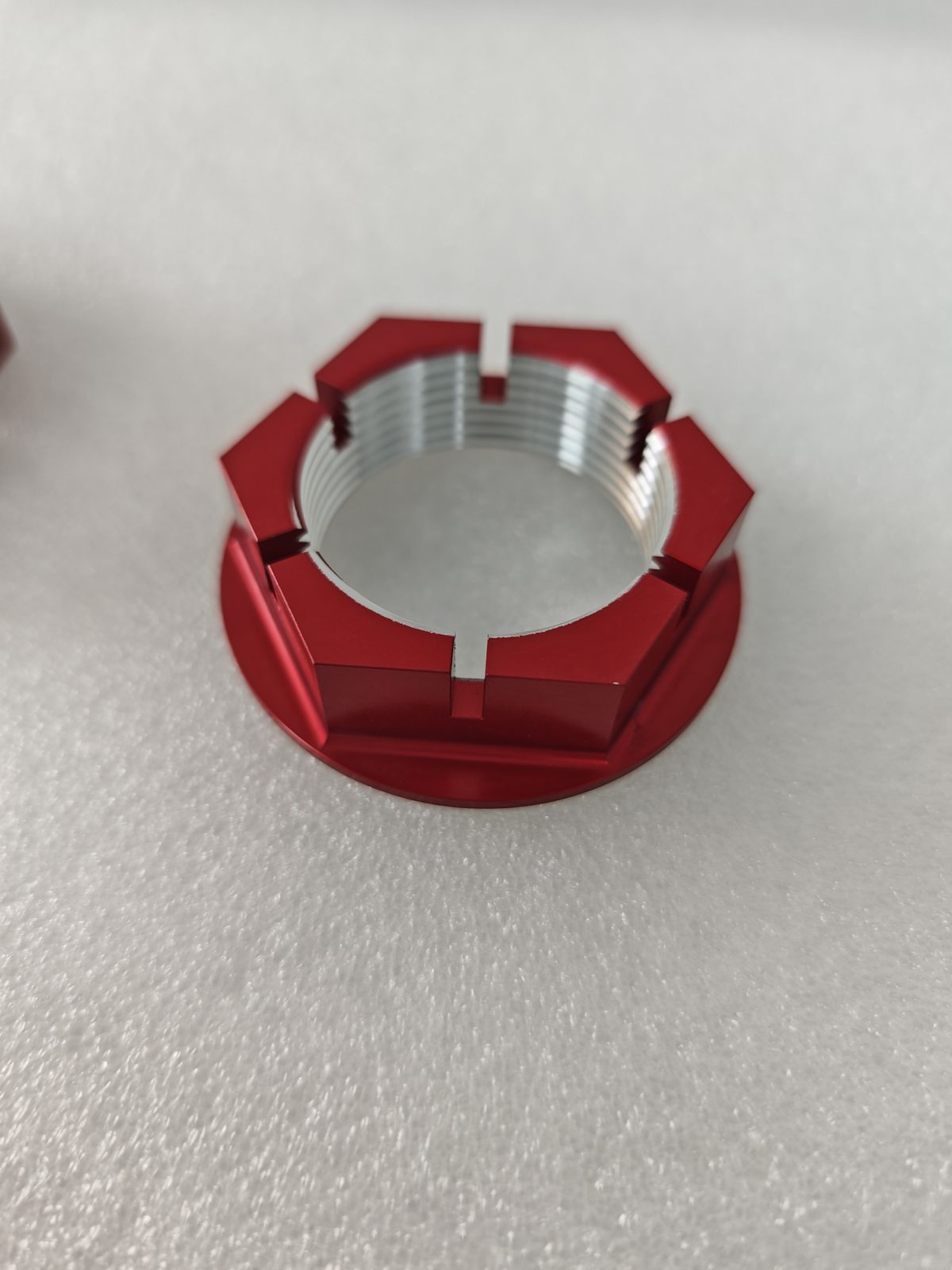
These are materials we machine regularly. They're a starting point, not a complete list. Most reasonable alloy or polymer requests can be accommodated.
General-purpose aerospace alloy. Excellent machinability, good corrosion resistance, readily anodized.
Commonly used for
Optical mounts, enclosures, structural brackets, chassis panels
High-strength aerospace grade. Superior strength-to-weight ratio versus 6061. AMS-sourced with full MTR.
Commonly used for
Satellite panels, structural flight hardware, high-load interfaces
Industry-standard titanium alloy. Low CTE, excellent fatigue resistance, biocompatible. Harder to machine, longer lead time.
Commonly used for
Cryogenic mounts, attitude control hardware, payload structural members
Low-carbon stainless for vacuum and corrosion-critical applications. Excellent weldability and passivation response.
Commonly used for
Vacuum chambers, fluid fittings, quantum lab hardware, marine environments
Precipitation-hardened stainless combining high strength with good corrosion resistance. Available to H900–H1150 condition.
Commonly used for
Avionics enclosures, high-strength shafts, surgical & defence components
High-performance engineering polymers. PEEK for thermal and chemical resistance; Delrin for dimensional stability and low friction.
Commonly used for
Electrical isolators, thermal breaks, custom bushings, lab fixtures
Working with a different alloy — Invar 36, Kovar, copper, or a grade not listed here? Our engineers are happy to advise. Most requests outside this list can be accommodated. Talk to an engineer →
Our engineering team reviews non-standard requests. Most can be accommodated: tighter tolerances, exotic materials, unusual geometries.
CNC machining is used across Factorem's verticals, but not limited to them. If your industry isn't listed, we're still worth a conversation.
Lens mounts, kinematic stages, detector housings, beamsplitter cubes, optical bench hardware
See Photonics page →
Cryogenic mounts, ion trap substrates, RF cavities, vibration isolation brackets, UHV-compatible hardware
See Quantum page →
Motor mounts, gearbox housings, actuator brackets, end-effector structures, encoder interfaces
See Robotics page →
Avionics enclosures, structural brackets, optical housings, payload interface plates. EAR99, commercial programs
See Defense page →
Satellite structure panels, attitude control hardware, solar array deployment brackets, separation mechanisms
See Space Tech page →
Medical devices, semiconductor equipment, industrial automation, research instrumentation. CNC machining applies broadly.
Common finishes applied to CNC machined parts at Factorem. Other finishes are available on request. If you have a spec sheet requirement, share it with us.
As-Machined
Ra 0.8–3.2µm. Fastest and most economical. Suitable for non-cosmetic and structural parts.
Anodize Type II
MIL-A-8625. Corrosion protection for aluminium. Clear, black, or coloured. 8–12µm typical.
Hard Anodize Type III
MIL-A-8625. High hardness (60+ Rockwell), wear resistance, thicker coating 25–75µm.
Chromate Conversion
MIL-DTL-5541 (Alodine). Electrical conductivity retained. For aluminium requiring EMI grounding.
Passivation
ASTM A967 / AMS 2700 for stainless steel. Removes free iron, improves corrosion resistance.
Electroless Nickel
Uniform coating over complex geometry. Wear-resistant, solderable, RoHS-compliant options available.
Bead Blast / Media Blast
Uniform matte cosmetic finish. Often used before anodizing for consistent appearance.
More on request
Black oxide, zinc plating, powder coat, gold plating, Teflon coating. Contact us with your spec.
Finish specs for aerospace and defence programs (MIL-SPEC) included in every order where applicable. Ask about your spec →
Design Considerations
Common design considerations for CNC machined parts. Guidance, not hard rules. If your geometry doesn't fit, send it and let our engineers advise.
Design internal corners with at least 0.5mm radius; a radius equal to 1/3 of pocket depth is a safe starting point. True sharp inside corners require EDM or grinding and add lead time.
Walls below 1.5mm can flex during cutting and affect dimensional accuracy; above 1.5mm is stable for most materials. Thin walls in titanium need special fixturing. Flag them in your brief.
Pockets deeper than 4× their width require longer, less rigid tooling. Tight tolerances become harder to hold in these features. Very deep narrow pockets are better approached from multiple sides or machined in stages.
Standard coarse-thread M-series metric or UNC imperial is fastest and most cost-effective. Fine threads, custom pitches, and Heli-Coil inserts are all available. Note them on the drawing.
Geometry that doesn't fit these guidelines? Most edge cases have a solution with the right machining strategy.
Talk to our engineersFrom file upload to delivery: what to expect at each step.
Send STEP, IGES, or DXF. Include your drawing or GD&T callouts if you have them. No file? Describe the part in an email. Our engineers will help scope it.
A Factorem engineer reviews your design for machinability, tolerance feasibility, and material fit. We'll flag anything that needs discussion before committing to a price.
You'll receive a fixed-price quote with lead time. Confirm material grade, finish specification, and any documentation requirements (MTR, CoC, FAI).
Parts are machined on 3-axis or 5-axis as appropriate, with in-process checks on critical dimensions. First articles are CMM-inspected against your drawing.
Parts ship with dimensional inspection report, Certificate of Conformance, and MTR where applicable. Tracked shipment with full handover documentation.
We routinely hold ±0.005mm on critical bore and flatness features. Standard features typically run ±0.01–0.05mm depending on geometry and material. Tighter tolerances for gauge-critical or optical-grade surfaces are reviewed case-by-case. Most can be accommodated with the right tooling strategy. Tell us your tightest callout and we'll confirm feasibility during DFM review.
Our standard machining envelope is 600 × 500 × 400mm. Parts outside this range are reviewed individually. We have access to larger-capacity machines through our vetted supplier network. Send us your geometry and we'll confirm feasibility and lead time.
Yes. Straightforward prismatic parts run on 3-axis. Complex geometries (undercuts, compound angles, multi-face features) are routed to 5-axis. Our DFM review determines the optimal approach. You don't need to specify axis count; just send the file and we'll scope it correctly.
Common materials include AL 6061-T6, AL 7075-T6, Ti-6Al-4V, SS 316L, SS 17-4 PH, Invar 36, Delrin (POM), and PEEK. This isn't a complete list. We work with a wide range of metals and engineering polymers. If your material isn't shown, contact us and we'll advise on machinability and lead time.
Tight bores are finish-reamed or ground after milling. Flatness-critical faces are fly-cut or surface-ground as a final operation. All critical dimensions are inspected with CMM and documented on the inspection report that ships with every order.
Every order ships with a dimensional inspection report and Certificate of Conformance. Material Test Reports (MTRs) to AMS or ASTM specification are standard for aerospace-grade alloys. First Article Inspection (FAI) reports are available on request. Let us know your documentation requirements when you confirm the order.
Upload your file for a DFM review and quote. Or talk to an engineer first. No obligation, no sales process.
DFM review within 24 hours · Fixed-price quote · Full documentation on every order

